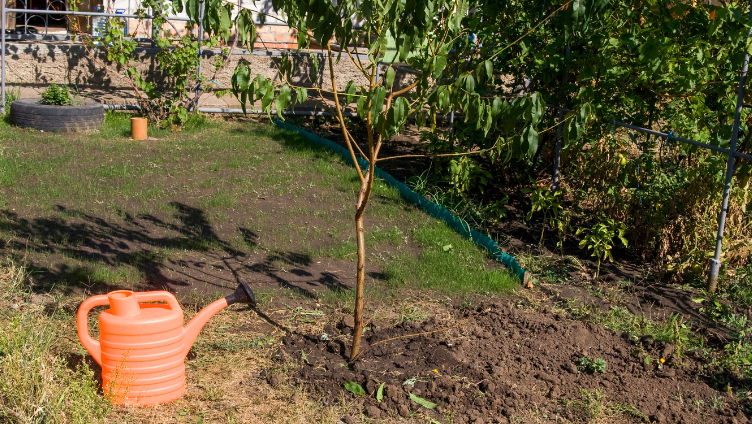
North Texas summers are notoriously brutal — with temperatures regularly climbing into the upper 90s and 100s°F, low humidity and little rainfall. Proper watering is one of the most important things you can do to keep your trees healthy, especially newly planted or young trees. Here’s a practical guide tailored to our region. Remember, this is only a general guide – you will need to monitor your trees and water accordingly based on the circumstances where you live.
Understand Your Tree’s Needs
💧Young trees (planted within the last 2–3 years) need the most attention. Their root systems are still developing.
💧Established trees are more drought-tolerant but still benefit from supplemental watering during extended dry spells.
💧Fruit trees, shade trees and evergreens all have slightly different needs — fruit trees often require more consistent moisture for good production.
Water Deeply and Infrequently
💧Rule of thumb: Water slowly and deeply so moisture reaches 12–18 inches into the soil.
💧How much: Provide 10–20 gallons per inch of trunk diameter per watering session for established trees. For young trees, 5–15 gallons per session is often enough.
💧Frequency: 1–2 times per week during extreme heat, depending on soil type. Clay soils hold water longer; sandy soils need more frequent watering.
Your irrigation system alone cannot provide enough water during the hottest part of summer!
Best Watering Techniques
💧Use a soaker hose or drip irrigation placed in a circle around the drip line (outer edge of the canopy).
💧Avoid shallow daily sprinkling — it encourages weak surface roots.
💧Water in the early morning or evening to reduce evaporation.
💧Mulch heavily (3–4 inches of wood chips or bark) around the base to retain moisture and cool the soil. Keep mulch away from the trunk.
Signs Your Tree Needs Water
💧Wilting or drooping leaves (especially in the afternoon)
💧Leaf scorch (brown edges)
💧Premature leaf drop
💧Slow growth or smaller-than-normal leaves
Common Mistakes to Avoid
💧Overwatering (leads to root rot)
💧Watering only at the base of the trunk
💧Ignoring soil type and drainage
💧Stopping watering too early in the fall
Bonus Tips for North Texas
💧Improve soil health with compost to increase water-holding capacity.
💧Consider drought-tolerant species for new plantings.
💧For fruit trees, consistent moisture during fruit development is especially important.
The Bottom Line
North Texas summers place significant stress on trees; by following these practices, your trees will have a much better chance of thriving through our challenging summers. Healthy trees also mean better shade, higher property value and stronger ecosystems.